Database Users
Industries that use database and why.
iBeauty Consulting Group
1/10/20261 min read
Who Uses Databases?
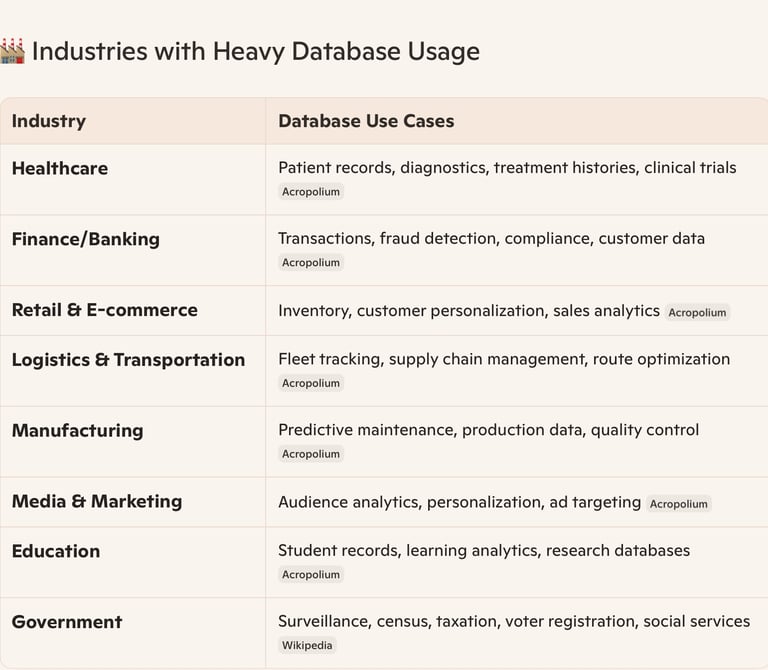
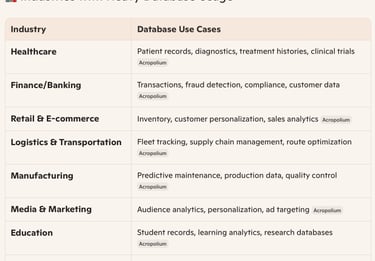
Databases are most heavily used by government agencies like law enforcement, homeland security, healthcare, and social services; professionals in finance, healthcare, and legal fields; and industries such as retail, logistics, manufacturing, and media. These sectors rely on databases to manage sensitive information, ensure compliance, and drive operational efficiency.
📊 Government Agencies That Rely on Databases
• Law Enforcement & Homeland Security• Agencies like the Department of Homeland Security (DHS) and local police maintain databases for biometrics, criminal records, surveillance data, and immigration files.
• Databases include fingerprints, facial recognition, DNA, and travel records.
• Public Health & Social Services• Databases track patient records, vaccination data, and social security information.
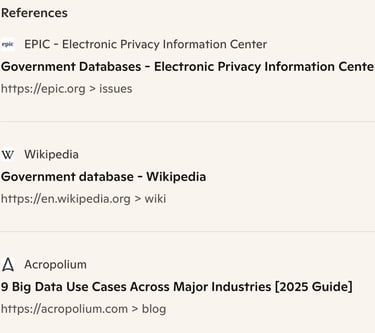
• Used for epidemiology, welfare programs, and healthcare delivery Wikipedia.
• Regulatory & Administrative Agencies• IRS: taxpayer records.
• DMV: vehicle registrations and driver histories.
• Election Commissions: voter registration databases Wikipedia.
• National Security & Intelligence• Intelligence agencies integrate multiple datasets for surveillance, border control, and counterterrorism.
👩💼 Professionals Who Use Databases Most
• Healthcare Professionals• Doctors, nurses, and researchers rely on Electronic Health Records (EHRs) and clinical databases for patient care and medical research Acropolium.
• Financial Analysts & Accountants• Use databases for transactions, compliance, fraud detection, and investment analysis Acropolium.
• Legal Professionals• Lawyers and paralegals depend on case law databases, contracts, and compliance records.
• Educators & Researchers• Universities and labs use databases for student records, research data, and publications.
⚠️ Risks & Considerations
• Privacy Concerns: Government and corporate databases often contain sensitive personal data (biometrics, financial records, health info).
• Cybersecurity: Breaches can expose millions of records, making data protection and encryption critical.
• Interoperability Issues: Linking databases across agencies or industries increases efficiency but also magnifies risks.
✅ In short: Law enforcement, healthcare, finance, and retail are the biggest database users, while government agencies like DHS, IRS, and public health departments manage the most sensitive and expansive datasets.