Computer Hacking Databases vs Apps
What is computer hacking?
COMPUTER HACKING
iBeauty Consulting Group
1/17/20262 min read
Computer Hacking Databases vs Apps
⚡ Common Hacking Methods
Phishing & Social Engineering: Tricking users into revealing credentials.
Malware: Installing malicious software to steal or damage data.
Password Cracking: Using brute force or stolen credentials.
SQL Injection: Exploiting database vulnerabilities.
Denial of Service (DoS/DDoS): Overloading systems to shut them down.45
📊 Risks & Impacts
Data theft: Personal, financial, or corporate information stolen.
System disruption: Shutting down services or corrupting files.
Financial loss: Costs of recovery, fines, and reputational damage.
Privacy invasion: Unauthorized surveillance or identity theft.
🛡️ Defense Against Hacking
Strong, unique passwords with multi-factor authentication.
Regular software updates and patching vulnerabilities.
Firewalls, intrusion detection systems, and encryption.
Employee training to avoid phishing and social engineering traps.3
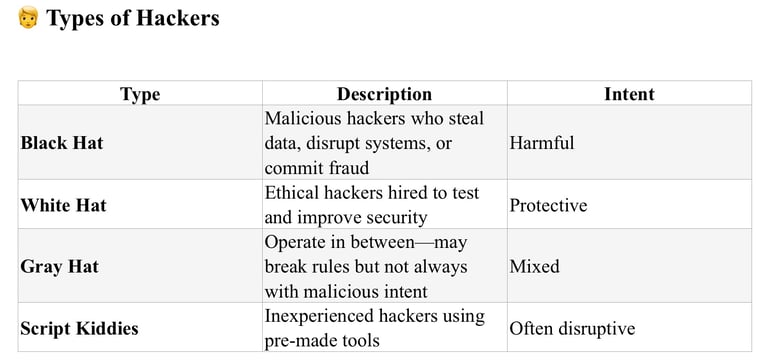
In short, computer hacking is both a threat and a tool—dangerous when used maliciously, but valuable when applied ethically to strengthen cybersecurity. Would you like me to break down the difference between hacking a database vs. hacking an application, since that ties directly to your recent work on security presentations.
Infographic: Odds of Hacking
Centralized Data Servers vs. Individual Business Databases
🖥️ Centralized Data Servers
High Attack Frequency
Constantly probed by hackers worldwide.
Billions of intrusion attempts daily.
Strong Defenses
Enterprise-grade firewalls, encryption, monitoring.
Dedicated security teams.
Outcome
More likely to be targeted, less likely to be successfully breached.
📂 Individual Business Databases
Lower Attack Frequency
Smaller scale, less attractive to global attackers.
Weaker Defenses
Limited IT staff, outdated software, weak passwords.
Outcome
Less likely to be targeted, but more likely to be successfully breached if attacked.
⚖️ Key Takeaway
Servers: Big targets, strong defenses.
Businesses: Smaller targets, weaker defenses.
Overall Risk: Both face real threats, but small businesses often suffer more breaches due to misconfigurations and lack of layered security.
References (5)
1What Is Hacking? | IBM. https://www.ibm.com/think/topics/cyber-hacking?lnk=thinkhpeverse2us
2What Is Hacking? Types of Hacking & More | Fortinet. https://www.fortinet.com/resources/cyberglossary/what-is-hacking
3What is Computer Hacking? - AEANET. https://www.aeanet.org/what-is-computer-hacking/
4What Is Hacking a Computer? - AEANET. https://www.aeanet.org/what-is-hacking-a-computer/
5What Is a Computer Hack? - AEANET. https://www.aeanet.org/what-is-a-computer-hack/